1st & 2nd Edition · results guide

Reading your results

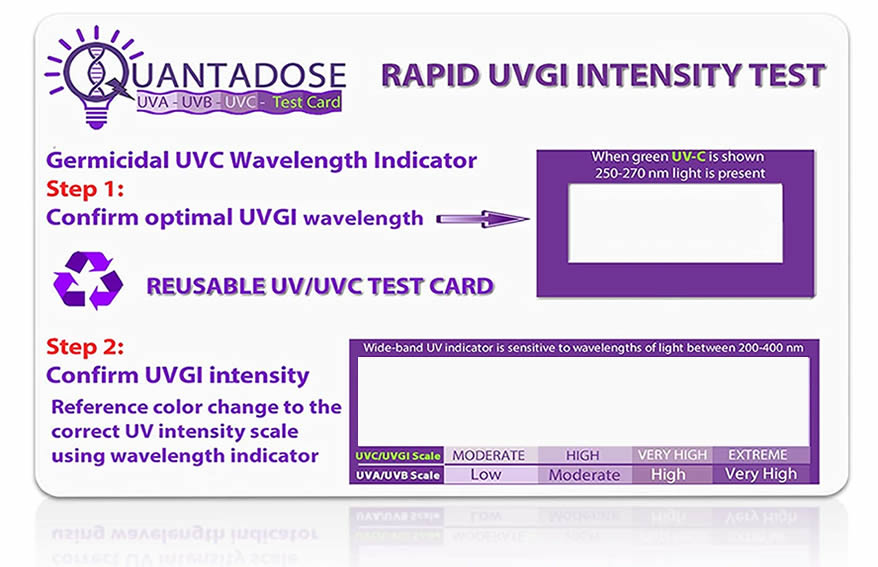
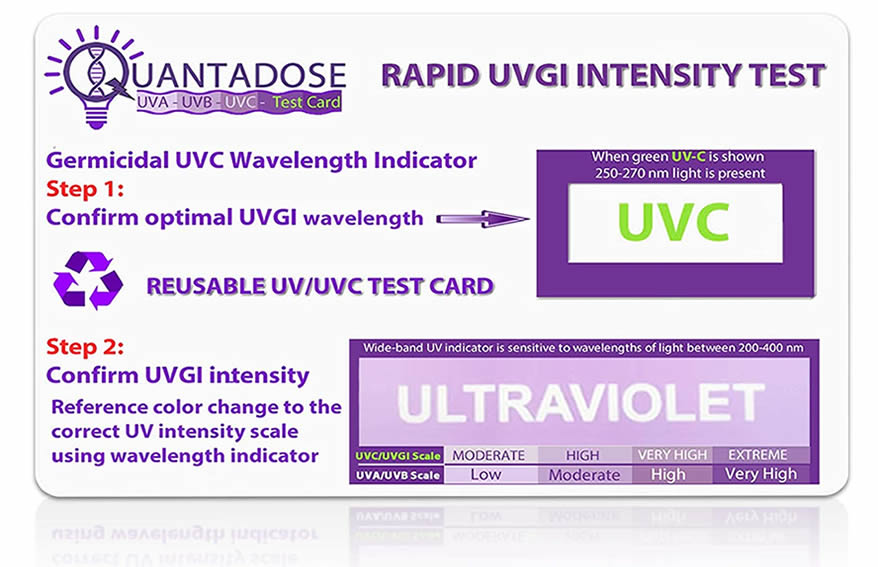
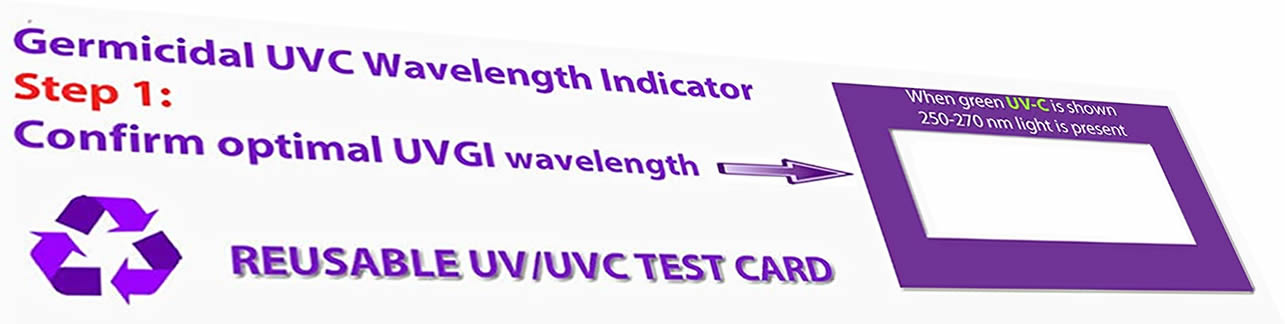
The QuantaDose UV-C test card is a two-part test. Step 1 confirms germicidal UV-C wavelength. Step 2 checks whether UV-C intensity is above about 300 µW/cm².

Questions about QuantaDose? Call(727) 888-5656and talk with our AI assistant any time.source: quantadose.com results flow chart
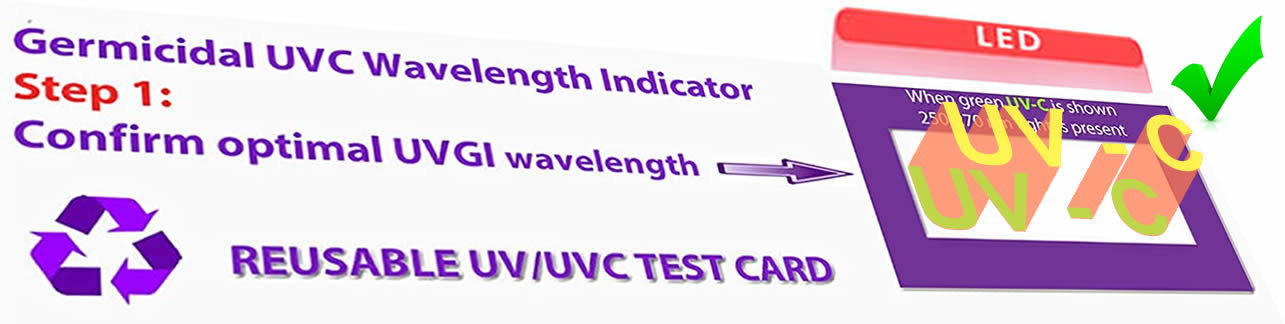
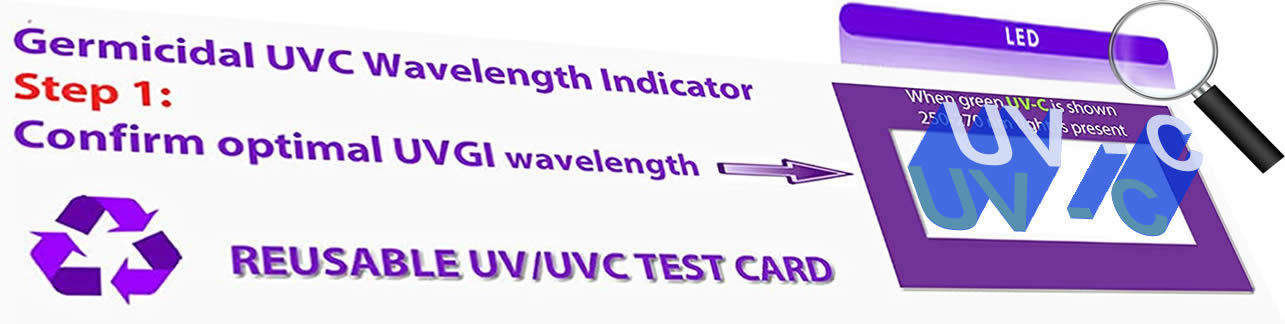
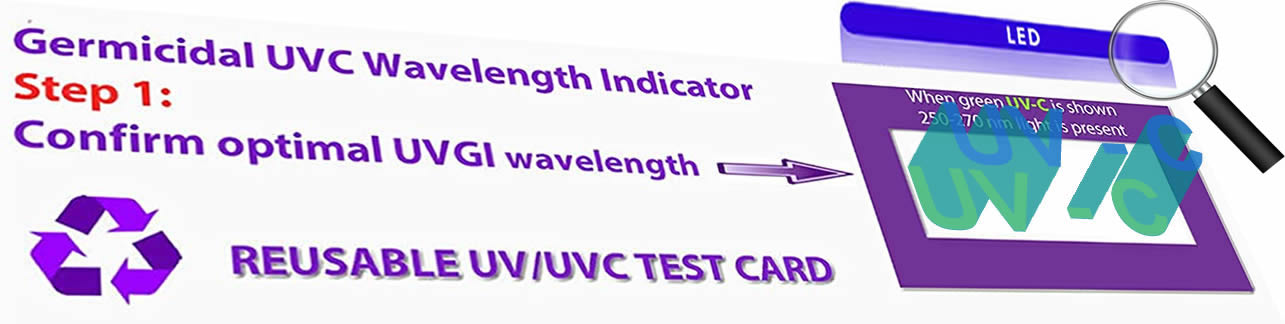
Step 1 · wavelength (instant)

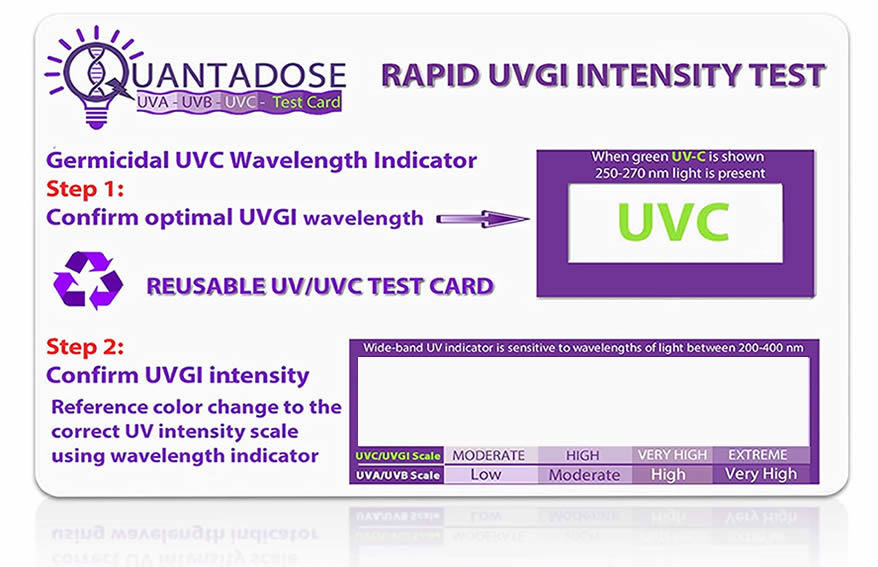
What color are the UV-C letters?

Step 1 glows only under invisible UV-C light between 222 and 280 nm. The letters give off green light at about 515 nm.

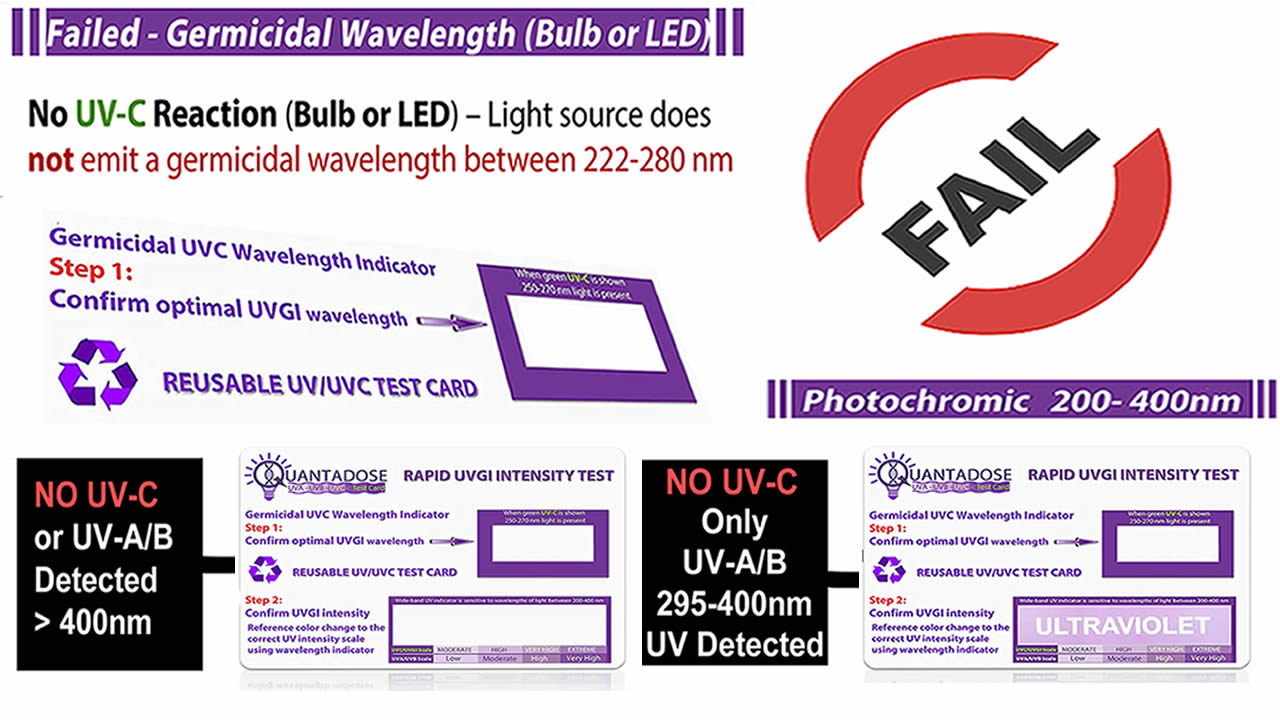
  1. No reaction: the light does not emit germicidal UV-C (222–280 nm). Go to Step 2 to see if non-germicidal UVA/UVB is present.
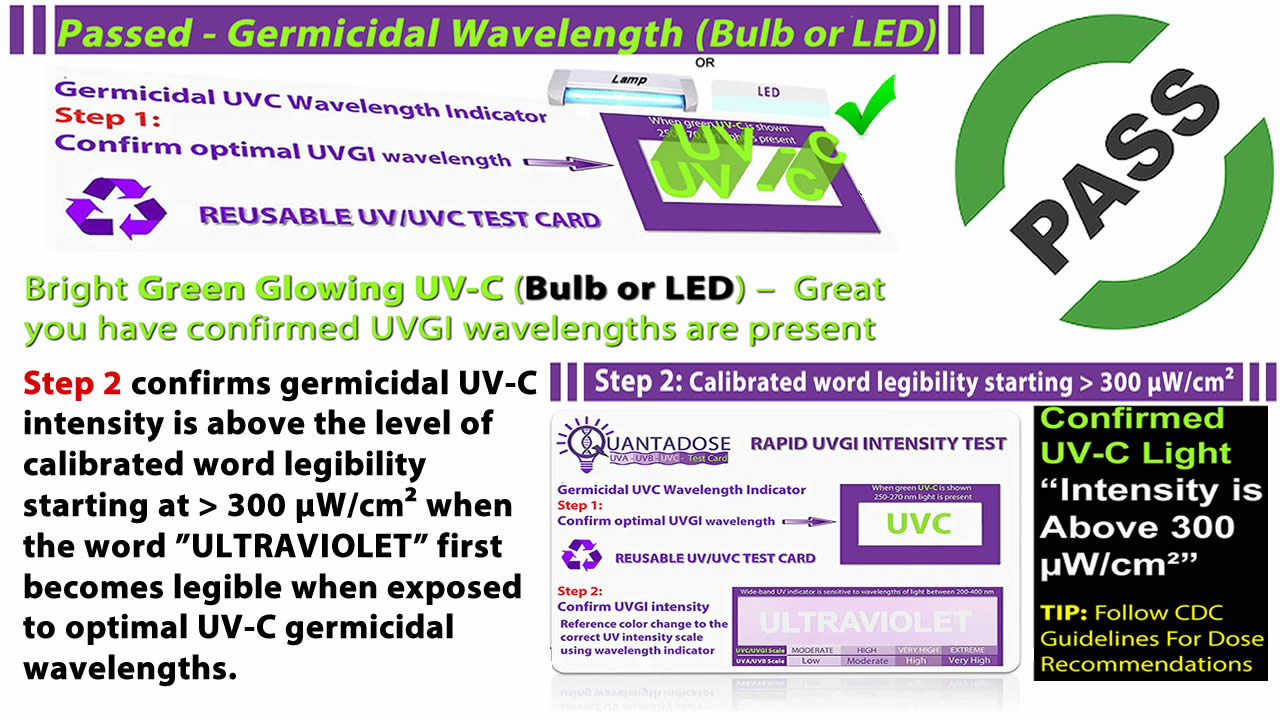
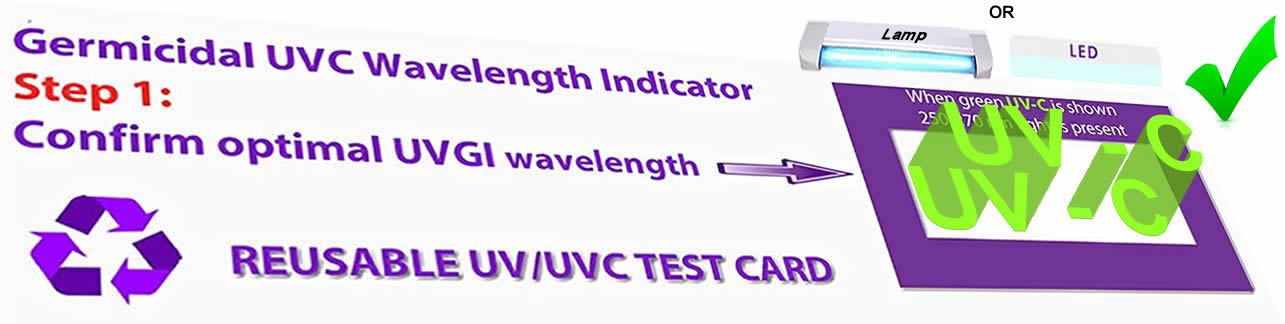
  2. Bright green: germicidal UV-C confirmed. Go to Step 2 to check intensity.
  3. Bright yellow (LED only): UV-C confirmed on an LED device that uses a red tracking light. Go to Step 2.
  4. White/blue with a strong blue hue (LED only): some UV-C is present, but the array may mix in UVA blacklight or other UVA/UVB LEDs. More investigation needed; the page recommends the magnifying UVC filter card from the Light Detective Kit.

Genuine mercury bulbs, excimer lamps and microcavity plasma bulbs always show bright green.

source: quantadose.com results flow chart
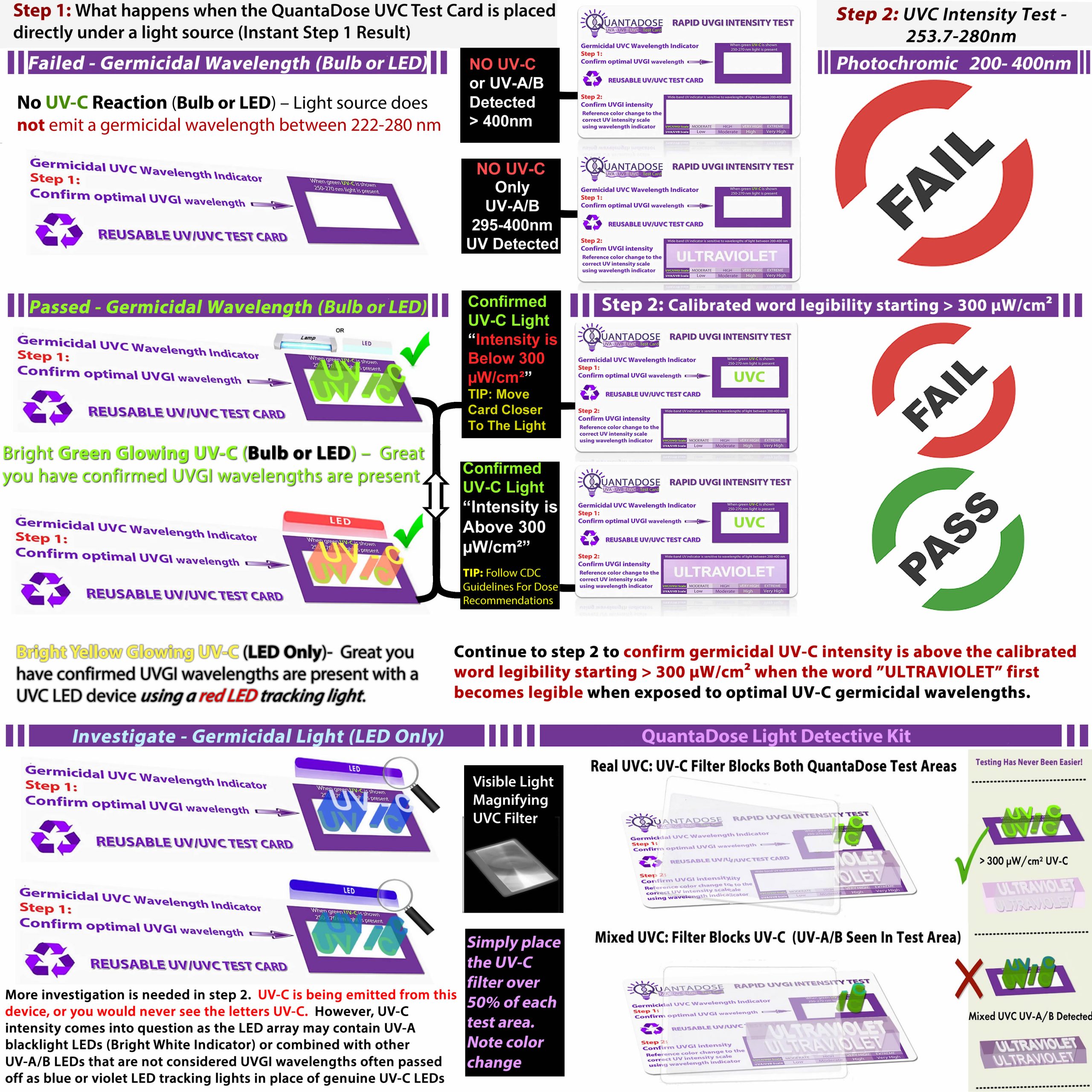
QuantaDose UV-C test results flow chart
Step 1 examples
No reaction: no germicidal UV-C
Bright green: UV-C confirmed
Yellow: UV-C LED with red tracking light
White: UV-C mixed with UVA LEDs
Blue hue: investigate further
Step 2 · intensity (15 seconds)

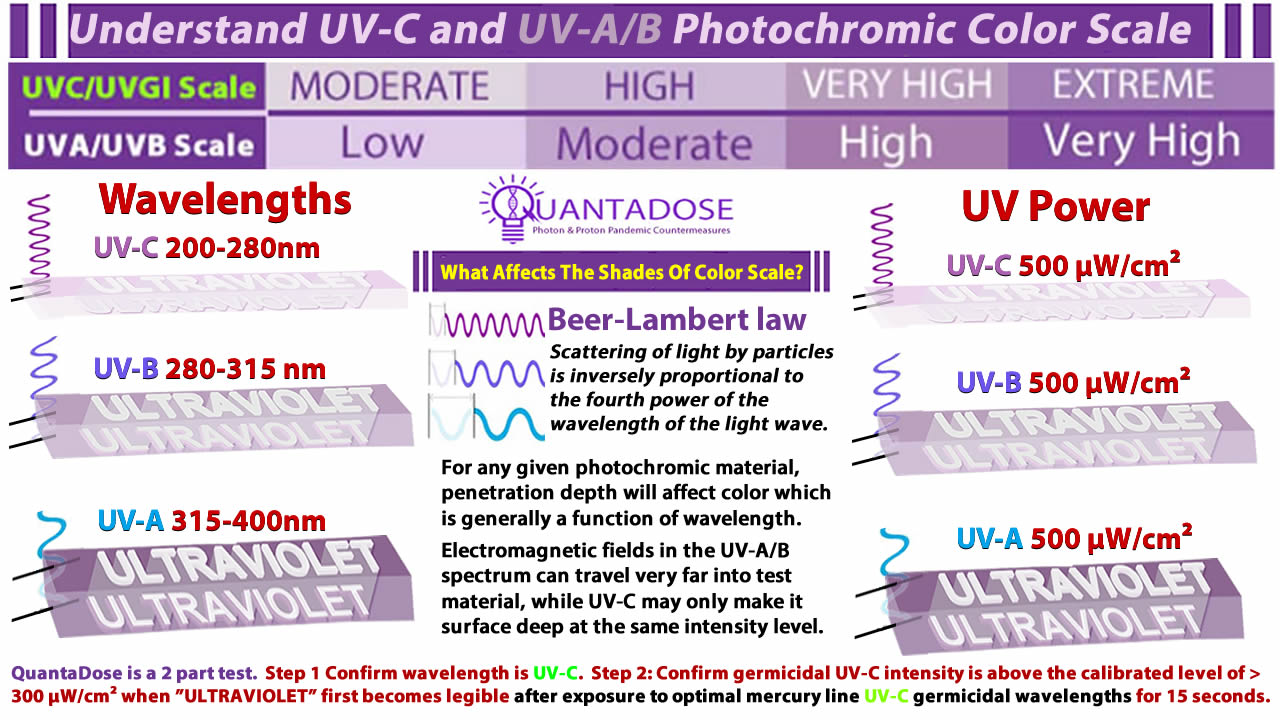
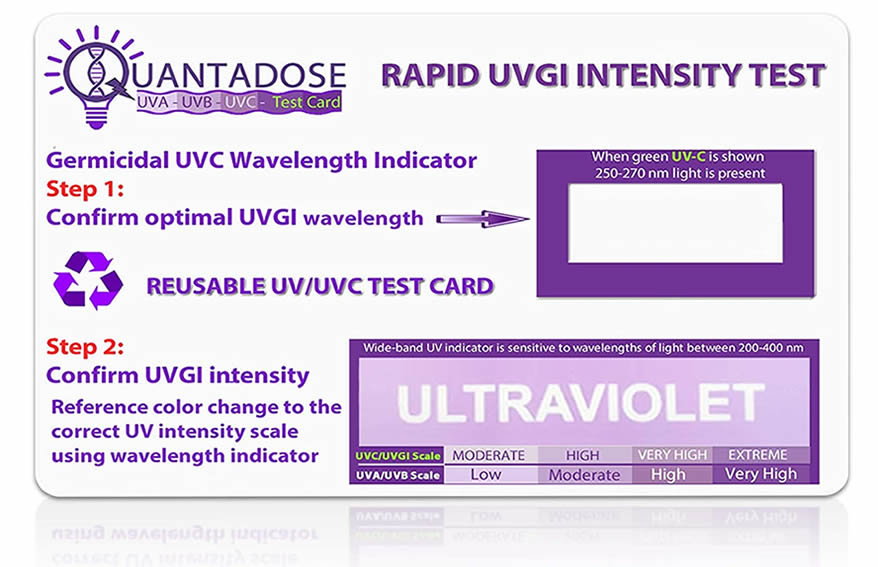
Can you read “ULTRAVIOLET”?

After about 15 seconds under the light, the word ULTRAVIOLET becomes legible once UV-C intensity is above about 300 µW/cm². The color scale is for visual reference only.

Safety: UV light can harm your eyes and skin, so wear proper safety equipment to protect them whenever you expose the card to the light.

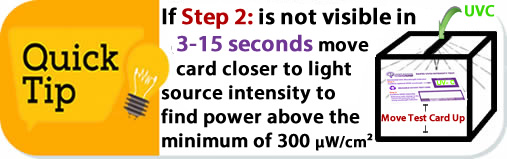
If the word is not visible within 3–15 seconds, move the card closer to the light (about 1 inch). If it still doesn't show, intensity is under 300 µW/cm².

Most common results:

  • No UVA/UVB or UVC detected
  • UVA/UVB detected, no UVC detected
  • UV-C detected but under 300 µW/cm² (ULTRAVIOLET not legible)
  • Passed: over 300 µW/cm² UV-C detected
source: quantadose.com results flow chart source (move closer): Amazon 2nd Edition directions
Step 2 intensity color scale
Not visible after 3–15 seconds? Move closer
Common outcomes
No UV or UVC detected
UVA/UVB only: no UVC
UVC detected, under 300 µW/cm²
Passed: over 300 µW/cm² UV-C
Fail: no UVC detected
Pass: UV-C detected
Pass: UV-C detected

A result showing no UV, or only UVA/UVB with no 222–280 nm UV-C, means the light should be considered a falsely advertised germicidal (UVGI) source.

3rd Edition 6-in-1

Red, green, purple.

On the 6-in-1, color shows wavelength: the same test area glows reddish-pink for UVA/UVB and green for UVC. Intensity is shown separately by the photochromic strip, which turns purple after exposure. More on the 6-in-1.

Read it under the light. The green (UVC) and reddish-pink (UVA/UVB) colors are fluorescent wavelength indicators. They glow only while the card is in direct light of that wavelength, and fade as soon as you take it out. The purple intensity strip is separate: it is photochromic and darkens after exposure.

source: 6-in-1 product page